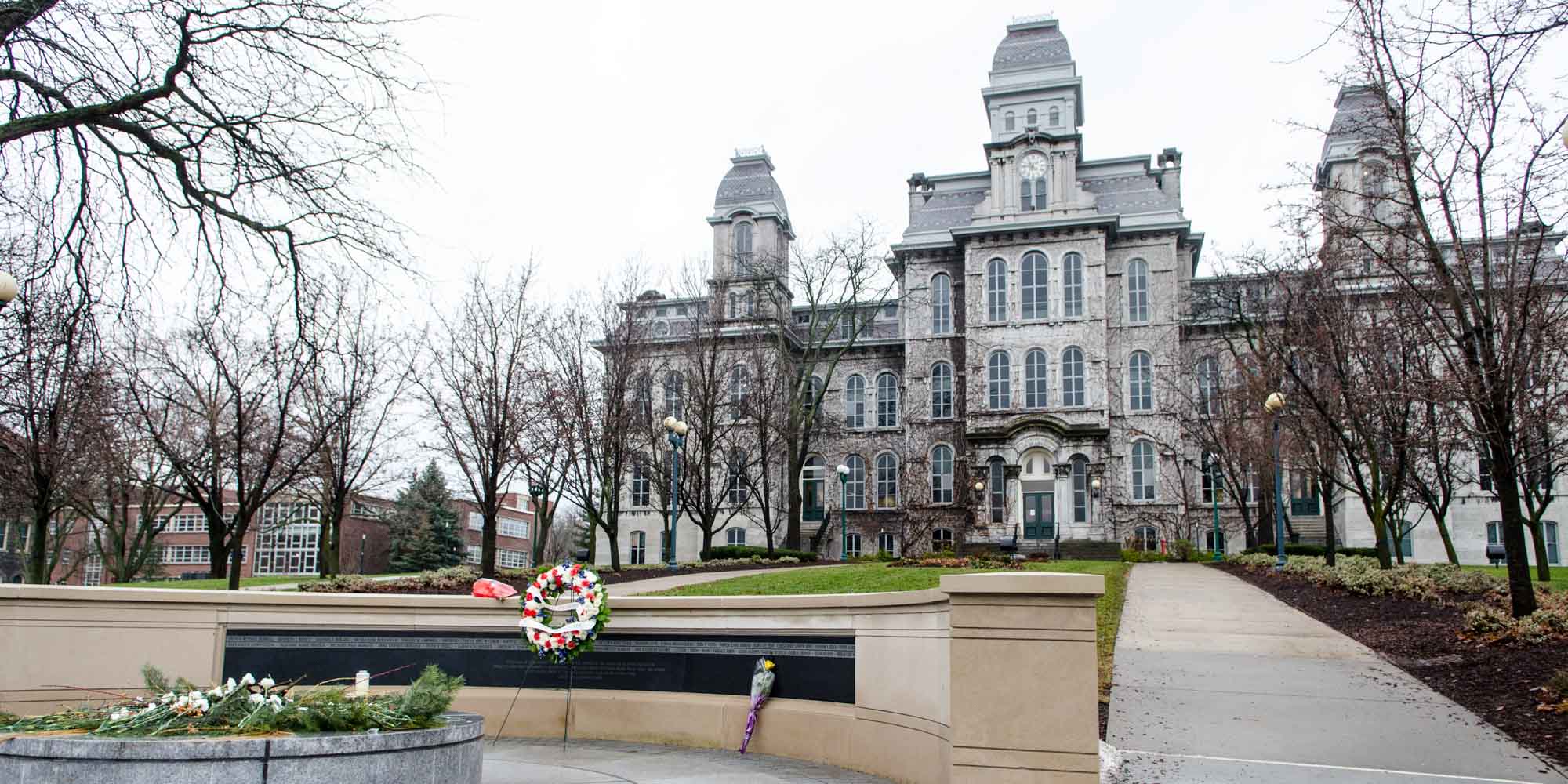
A sweater, a journal, a board game, a ball cap: nondescript objects that, in a normal context, would warrant little attention. Yet each item, no matter how commonplace, no matter how seemingly mundane, carries with it a whisper of a life cut short by a distant tragedy. All of the objects listed now reside safely in the Pan Am Flight 103/Lockerbie Air Disaster Archives at Syracuse University. Each of them belonged to a passenger on the ill-fated flight; each of them fell six miles to earth. Much like the quilt in Hendricks Chapel, the letters, tapes, DVDs, and personal effects donated to the Archives forms a living link to the night of December 21, 1988—but also, and perhaps more importantly, to the lives of those lost on that dreary evening over 25 years ago.
The Archives, housed in the sixth floor of the Bird Library, has a dual presence. It serves as a digital repository for researchers through its growing collection of encoded archival descriptions and finding aids. This site would never have come into existence without Karen Hunt’s EAD, which went online last spring. Most of the images on this site come from this resource. There are a number of similar EADs up now, and as of this past week (2/14), there are finding aids listing the material in the archives (when applicable) for each of the victims. The site also features an extensive number of photographs, documents, newsletters, and other materials, making it a fantastic resource for scholars.
As extensive as the digital presence is, its eclipsed by the hundreds of boxes of materials housed on the 6th floor. As I noted in my post following Remembrance Week, 2013, nothing can replace the experience of seeing letters, scrapbooks, and the personal effects of victims displayed before you. The collection continues to grow as families, friends, and others add material to the repository.
Archivists Cara Howe and Edward Galvin have worked diligently to ensure that the victims voices are heard well into the 21st Century.